

Six Teacher Tasks
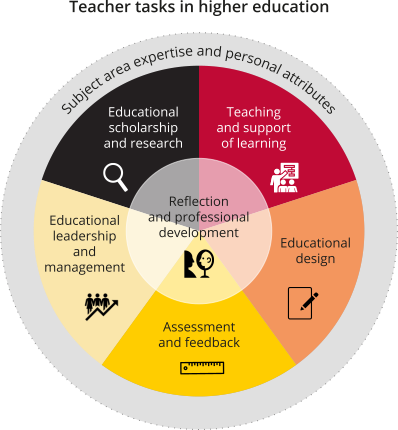
The Teaching and Learning Collection is structured around six teacher tasks. These teacher tasks are the result of a systematic review in which 46 frameworks from around the world were analyzed and synthesized (van Dijk et al., 2020). The UU vision on these teacher tasks (Utrechts Onderwijs Model) are collected in this Introduction to the six Teacher Tasks:
Teaching and supporting learning
Teaching and supporting learning concerns guiding the learning process through learner-teacher interactions to achieve learning goals. This includes formal learning goals as well as learning goals of learners. Teaching and supporting learning may happen in a variety of formats, including lectures, small group sessions, supervision and mentoring.
Educational Design
Educational design entails the development of goals, content, structure, activities and materials for education and combining these into a coherent whole for a lesson, course or curriculum. The items in the Essentials collection cover different aspects of course design.
Steps for designing a course
- This item about the ADDIE model outlines the steps in course design.
Enhancing the quality of a course design
- Constructive alignment explains the backbone of a good course design as alignment between intended learning outcomes, assessment and teaching and learning activities.
- The item about learning goals and Bloom’s taxonomy provides guidance for formulating the learning goals of a course.
Assessment and feedback
Assessment and feedback concern the design, construction, implementation and evaluation of the assessment of student learning and performance. The information in the Essentials collection focuses primarily on assessment and feedback at the course level and addresses several key aspects.
Overarching frameworks for assessment
- The items on the functions of assessment and quality of assessment explain why we assess and what characterizes quality assessments.
- The items on assessment policy and assessment organisation provide insight into the broader context in which assessment takes place at the university.
The assessment process step by step
The assessment cycle is explained in a dedicated item. This cycle offers an overview of all steps involved in assessment within a course.
Leadership and management
Educational leadership and management concerns how teachers exert intentional influence on education through their relationships with others. Teachers do this in many ways:
- Engages with relevant stakeholders
- Organises, coordinates and manages education and all resources involved
- Engages in evaluations of education, quality assurance, accreditations, and audits
- Participates and contributes to education-related committees and fora
- Supports, mentors, and promotes colleague teachers’ professional development.
- Influences, establishes and implements policies and culture
- Initiates, leads and implements educational change and innovation.
Scholarship and research
Educational scholarship and research includes acquiring an understanding of educational theories and models and applying these to teaching practice. It also includes inquiry into own or local teaching practice (also referred to as scholarship of teaching and learning) as well as (discipline-based) educational research. The difference between these two is outlined below. Finally, sharing and disseminating knowledge, experience, innovation and research is also part of this teacher task.
Reflection and professional development
Developing yourself professionally as a teacher thus is important. If you take time to reflect on your teaching, alone or with others, teaching becomes easier and more enjoyable. If you attend workshops on education or qualification tracks, (like BKO, SKO or LOL) you not only develop your teaching competencies, but also meet like-minded colleagues and thus develop your network.